Zirconia vs Titanium Dental Implants: Which is the Better Option? FAQs
Are you in need of dental implants and confused about which type to choose? With the advancements in dentistry, patients now have the option to choose between zirconia and titanium dental implants. Both types have their pros and cons, and it is essential to understand the differences to make an informed decision.
In this article, we will compare zirconia and titanium dental implants, their advantages and disadvantages, and frequently asked questions to help you make an informed decision.
Zirconia Dental Implants
Definition
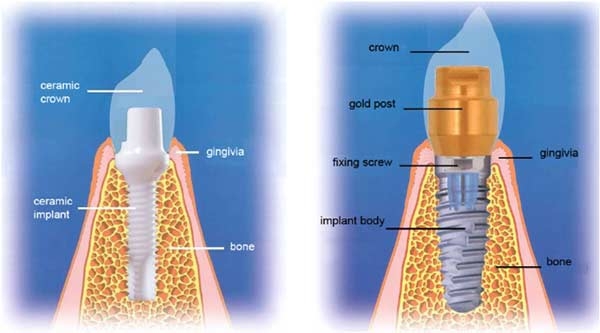
Zirconia dental implants are made of zirconium oxide, a white ceramic material that is biocompatible, meaning it can integrate with the jawbone. Zirconia implants are relatively new in the field of dentistry and have gained popularity due to their aesthetic appeal.
Advantages
- Aesthetically pleasing: Zirconia implants are white and blend in with natural teeth, making them a preferred choice for patients who are concerned about the appearance of their smile.
- Biocompatible: Zirconia implants are biocompatible and do not cause an allergic reaction, making them a safe option for patients with metal allergies.
- Corrosion-resistant: Zirconia implants are corrosion-resistant and do not corrode over time like titanium implants, which can result in a metallic taste in the mouth.
- Low thermal conductivity: Zirconia implants have low thermal conductivity and do not conduct heat or cold, reducing sensitivity to temperature changes in the mouth.
Disadvantages
- Lack of long-term data: Zirconia implants are relatively new, and there is limited long-term data on their success rate.
- More brittle: Zirconia implants are more brittle than titanium implants and may fracture under pressure.
- More expensive: Zirconia implants are more expensive than titanium implants.
Titanium Dental Implants
Definition
Titanium dental implants are made of titanium, a biocompatible metal that is commonly used in medical implants due to its strength and durability.
Advantages
- Proven track record: Titanium implants have been used for over 50 years and have a proven track record of success.
- Strong and durable: Titanium implants are strong and durable and can last a lifetime with proper care.
- Greater flexibility: Titanium implants can be used in a variety of implant placement scenarios due to their flexibility and strength.
- Lower cost: Titanium implants are less expensive than zirconia implants.
Disadvantages
- Metallic appearance: Titanium implants can be visible through the gum line and may not blend in with natural teeth, resulting in an unnatural appearance.
- Corrosion: Titanium implants can corrode over time, resulting in a metallic taste in the mouth.
- Metal allergies: Patients with metal allergies may not be able to tolerate titanium implants.
Comparison Between Zirconia and Titanium Implants
- Aesthetics: Zirconia implants are more aesthetically pleasing than titanium implants.
- Biocompatibility: Both zirconia and titanium implants are biocompatible.
- Strength: Titanium implants are stronger than zirconia implants.
- Durability: Titanium implants are more durable than zirconia implants.
- Cost: Titanium implants are less expensive than zirconia implants.
FAQs
- Are zirconia implants safe? Yes, zirconia implants are biocompatible and safe
- Are titanium implants visible? Titanium implants may be visible through the gum line and may not blend in with natural teeth.
- Can zirconia implants fracture? Yes, zirconia implants can be more brittle than titanium implants and may fracture under pressure.
- Which type of implant is more expensive? Zirconia implants are generally more expensive than titanium implants.
- How long do dental implants last? Dental implants can last a lifetime with proper care and maintenance.
Conclusion
In conclusion, both zirconia and titanium dental implants have their advantages and disadvantages, and the choice ultimately depends on the individual patient's needs and preferences. Zirconia implants are more aesthetically pleasing and corrosion-resistant, but they are more expensive and may be more prone to fractures. On the other hand, titanium implants have a proven track record of success, are stronger and more durable, but may be visible through the gum line and can corrode over time.
It is essential to consult with a qualified dentist to determine which type of implant is best suited for your specific situation.